





Home Agriculture Animal Nutrition Our Comodities for Animal Nutrition
Magnesium (Mg) is an essential macro element in animals. About 65% of this mineral is stored in the skeletal system, where it contributes to bone strength together with calcium and phosphorus. The remainder, in an ionized form Mg²⁺, is present in the cells:
Mg²⁺ is the 2nd most abundant intracellular cation in the animal’s body.
Magnesium is involved in energy metabolism, regulates calcium and supports antioxidant mechanisms.
Magnesium acts on muscle contraction.
Magnesium contributes to the transmission of nerve impulses.
Terresis has a wide range of magnesium sources suitable for livestock nutrition:
Our magnesium sources are all adaptable to your technical constraints and nutritional requirements:
– Various origins, Spain, Brazil and more,
– Various particle sizes, from a fine, intermediate to coarse powder,
– Various solubility/reactivity, an interesting characteristic depending on the manufacturing process of certain components of the ration. For example, the reactivity between a magnesium oxide and a phosphate can impact the strength of blocks and buckets for farm animals.
As an integrated player and recognized expert in magnesium, Terresis Agriculture develops solutions adaptable to the specific needs of Animal Nutrition. This approach is based on three structured forces that make the value of our offer:
In animal production, especially in ruminants, magnesium intake is crucial. Pasture grasses often contain low levels of magnesium (NRC, 2001), and its digestibility depends on soil type, climate, stage of harvest, and ration balance. For example, a high potassium content (>15 g/kg DM) can reduce its absorption.
Magnesium deficiency can lead to serious disorders such as grass tetany, which is common in ruminants in the spring. This hypomagnesemia is manifested by neuromuscular disorders and convulsions, due to a sudden drop in blood magnesium, hence the need to supplement ruminants.
Among the different forms of magnesium salts available for animal feed (chloride, sulphate, carbonate, etc.), magnesium oxide (MgO) is the most widely used by farmers.
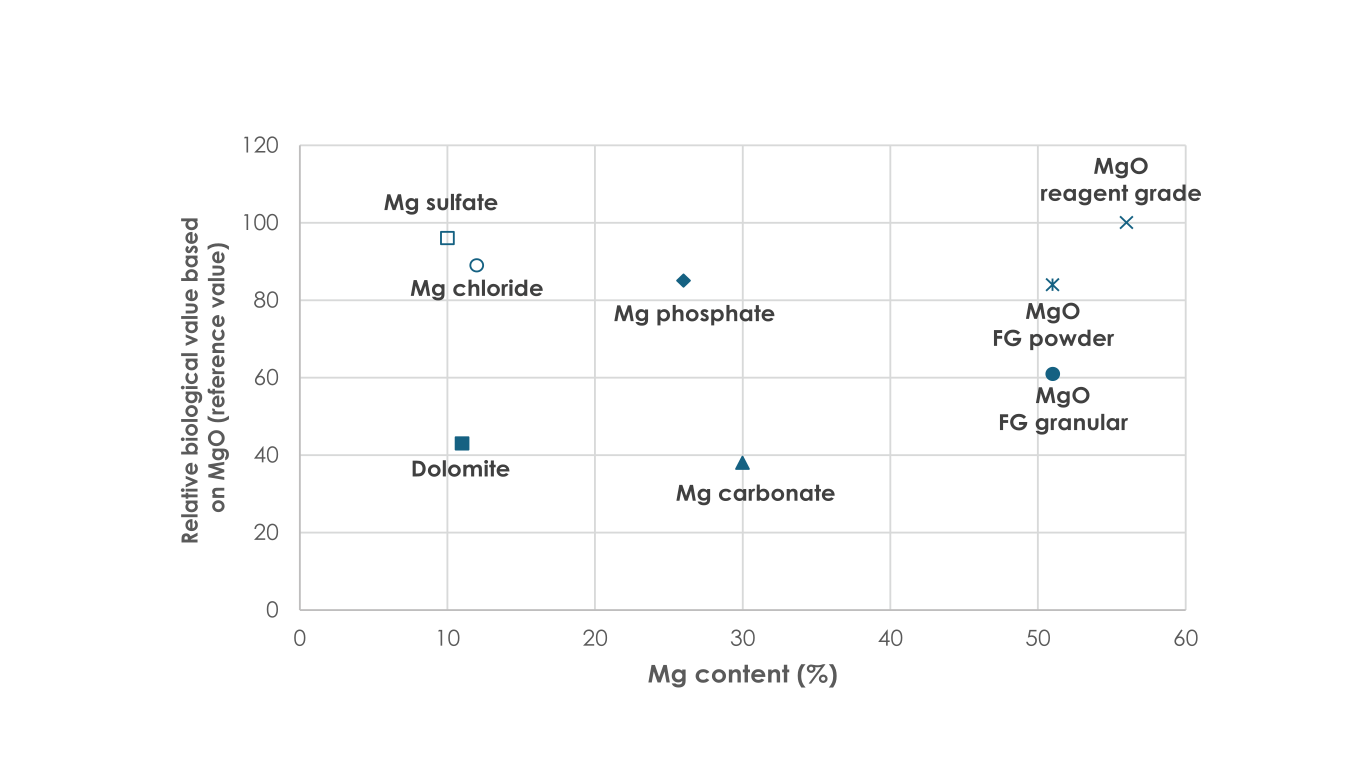
Different sources of magnesium can be compared using relative bioavailability, which measures how efficiently a nutrient is absorbed by the body. In this case, we evaluate sources of magnesium used in animal nutrition, comparing them to a reference: MgO of “reagent grade” quality, very pure and used as a standard. MgO intended for animal feed is designated by FG (Feed Grade).
Using data from EMFEMA, the graph above shows that magnesium oxide has the best balance between magnesium content and relative bioavailability.